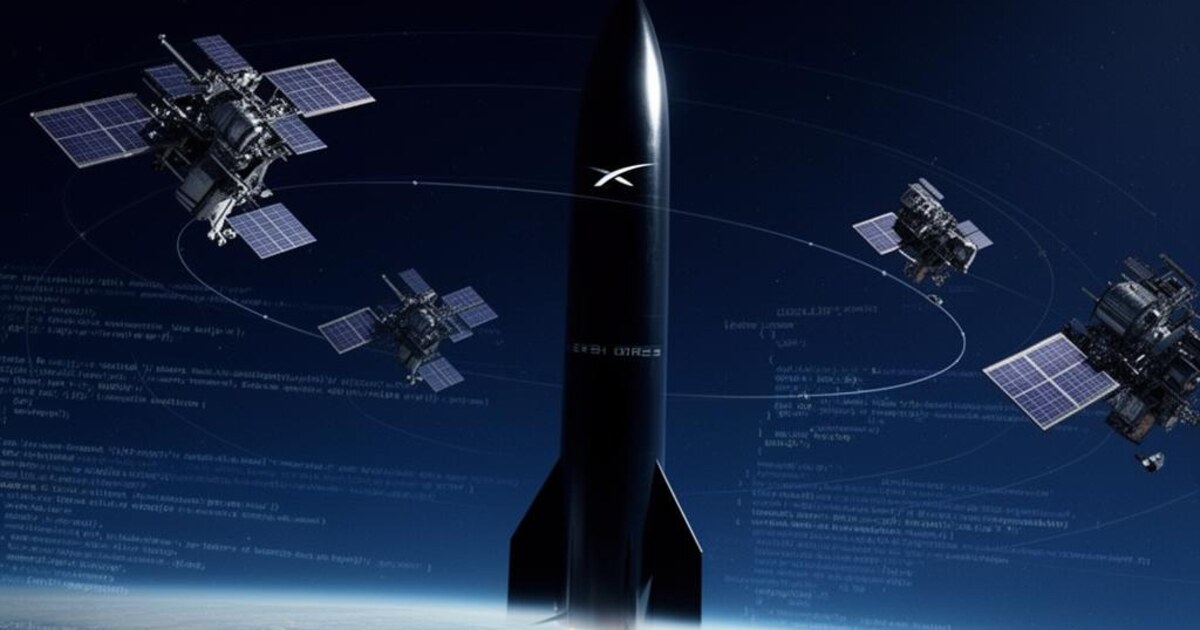
SpaceX is buying Cursor for $60 billion. The China angle lives in orbit, not in code.
The Cursor acquisition is a vertical-integration play aimed at Anthropic and OpenAI. The U.S.–China story shows up where SpaceX's own IPO filing points: energy and orbital compute.
SpaceX has agreed to buy Anysphere — the company behind the Cursor AI coding tool — in an all-stock deal that values Cursor at $60.0 billion. This is not a rumor: the terms sit in a securities filing SpaceX submitted on June 16, 2026. A SpaceX merger subsidiary, X67 Inc., will merge into Cursor, which survives as a wholly owned subsidiary, with closing expected in Q3 2026, subject to regulatory approval.
What SpaceX actually bought
Cursor is one of the most widely used AI coding tools, but its lead has been slipping. By one measure of customer spending, its share of the category fell from 41% in June 2025 to about 26% by May 2026, with Anthropic now holding roughly half the market. That context matters, because Cursor''s product has leaned on outside models from the very companies SpaceX is racing. Folding Cursor into SpaceX hands its AI unit, xAI, a developer-facing product, a stream of real coding data to train on, and a route to swap in its own models.
SpaceX absorbed xAI in an all-stock merger effective February 2, 2026, and is already training its next model, Grok-5, at the Colossus II data center in the Memphis area. Cursor is the application layer that stack was missing.
Correction to the widely-run figures. The "$10 billion break-up fee" reported elsewhere is imprecise. SpaceX''s prospectus shows the deal traces to an April 2026 compute-and-option agreement, and that if the option were terminated, Cursor would be owed a $1.5 billion termination fee plus an $8.5 billion deferred services fee — two separate amounts that sum to $10 billion, not one fee. And Anthropic''s compute allocation is about 325,000 GPUs across both Colossus sites; the "220,000" figure that circulated described a single facility.
What it means for SpaceX
The logic is total vertical integration: own the launch, the satellites, the power, the data centers, the model — and now the app. SpaceX priced its IPO at $135.00 a share for 555,555,555 shares — about $75 billion raised, the largest U.S. listing on record. In the same prospectus, the company claims a $28.5 trillion total addressable market, of which $26.5 trillion is AI — and tellingly, it excludes China and Russia from that estimate.
Cursor also feeds a second SpaceX business: renting out compute. The company has turned its Memphis data centers into a compute-landlord operation. Its filing discloses that Anthropic agreed to pay $1.25 billion per month through May 2029 for roughly 325,000 NVIDIA GPUs across Colossus and Colossus II. Separately, Reuters — quoting SpaceX''s June 5 filing — reported that Google agreed to pay $920 million per month from October 2026 to June 2029 for about 110,000 GPUs. We confirmed the Anthropic terms directly in the prospectus; the Google figures are filing-disclosed but quoted via Reuters, pending a direct read. Reuters estimated the two deals together exceed $70 billion over their lifespans — a projection that assumes neither is cancelled early, though both can be exited on 90 days'' notice.
Where the China race actually is
Here is the honest read: the Cursor deal is a fight against U.S. rivals, not China. The U.S.–China dimension lives one layer down, in energy and orbit — and SpaceX''s own prospectus says so. The filing argues that U.S. electricity generation grew at less than 3% a year from 2023 to 2025, while China''s grew at roughly twice that rate. SpaceX''s answer to that constraint is to move AI compute off the planet, where solar power is near-constant; it expects to begin deploying orbital AI-compute satellites as early as 2028.
That ambition runs straight into China''s parallel buildout. China is fielding two state-backed satellite mega-constellations, and analysts describe the field splitting into two rival blocs — one Western, one led by Beijing. As SpaceX headed into its IPO, China''s Spacesail had around 200 satellites in orbit and aimed to begin broader commercial service by the end of 2026. The contest Cursor speaks to is the application layer. The contest that actually shapes SpaceX''s filing is infrastructure: chips, power, and orbit.
What still has to happen
The acquisition needs regulatory clearance and is not expected to close until Q3 2026. Cursor''s underlying problem is real — a category leader losing share, now asked to wean itself off the models it competes with. And the largest claims in SpaceX''s story, from millions of orbital data-center satellites to a $28.5 trillion market, are projections the company itself flags as uncertain. We will update this piece as the Google compute terms are confirmed directly against the filing, and as the deal clears review.
Sources
Every figure above is checked against SpaceX''s SEC filings where possible. Items marked Secondary are confirmed in credible reporting that quotes the filing, pending a direct read of the source document.
- [SEC · Tier 1] SpaceX, Form 8-K (Cursor merger agreement), filed June 16, 2026. sec.gov
- [SEC · Tier 1] SpaceX, Form 424(b)(4) definitive prospectus, dated June 11, 2026 — TAM, Anthropic compute agreement, Cursor fee structure, xAI merger date, financials, China-energy comparison, orbital-compute timeline. sec.gov
- [Reuters · Tier 3 → filing] "SpaceX lands Google AI compute deal after Anthropic pact ahead of IPO," June 5, 2026, quoting SpaceX''s June 5 amendment. marketscreener.com
- [CNBC · Tier 3] "SpaceX to acquire the AI coding startup Cursor for $60 billion," June 16, 2026 — Cursor revenue and market-share (Ramp spending data). cnbc.com
- [SpaceNews · Tier 3] "China enters race for LEO broadband dominance." spacenews.com
- [Rest of World · Tier 3] "SpaceX vs. Spacesail: China''s Starlink rival challenges the IPO." restofworld.org
Verification status: 11 load-bearing claims checked against primary SEC filings; the Google compute terms remain at secondary tier pending a direct read of the related-party section. Corrections logged: the "$10B break-up fee" decomposition and the Anthropic GPU-count scope.
Comments
Loading comments…